


 Deutsch
 English
 Español
 Français
 Nederlands
 Português


 Share
Share




In early 2026, Beijing embedded permanent export controls on rare earths, tungsten, and antimony into its 15th Five-Year Plan, triggering sixfold price spikes outside China and exposing deep Western vulnerabilities in defense, electric vehicle (EV), and renewable energy supply chains. With China controlling roughly 90% of global rare earth processing, 80% of tungsten, and 60% of antimony, the strategic crisis has prompted the United States to launch the FORGE initiative—a 54-country alliance—and Project Vault, a $12 billion strategic reserve. Meanwhile, the European Union's Critical Raw Materials Act faces a 12-to-20-year timeline to build independent capacity. This article analyzes whether the West's 12-to-18-month window to diversify is already closing, and what rising resource nationalism from Indonesia, Chile, and the Democratic Republic of the Congo (DRC) means for the global energy transition.
China's 15th Five-Year Plan: Export Controls as Permanent Policy
China's 15th Five-Year Plan (2026–2030) explicitly identifies rare earths as providing 'competitive advantages' for the first time, marking a strategic shift from 'World's Factory' to 'World's Chokepoint Controller.' According to a multi-institutional analysis published in early 2026, Beijing's calibrated export controls on rare earths, tungsten, and antimony have reduced licensing approval rates for European firms below 25%. Over 80% of European companies now depend on Chinese supply chains for minerals essential to defense, EVs, and renewable energy. The EU carbon border tax has added further complexity to transatlantic trade dynamics.
Antimony prices surged from $1,400 per ton to $51,500 per ton—a 36-fold increase—while tungsten rose over 200% and dysprosium hit $931 per kilogram, up 105% year-to-date. The analysis argues that China is weaponizing control rather than scarcity, using temporary, reversible restrictions to maintain pricing power and extract strategic concessions while discouraging large-scale Western investment in alternatives.
The Western Counterpunch: FORGE and Project Vault
FORGE: A 54-Nation Alliance
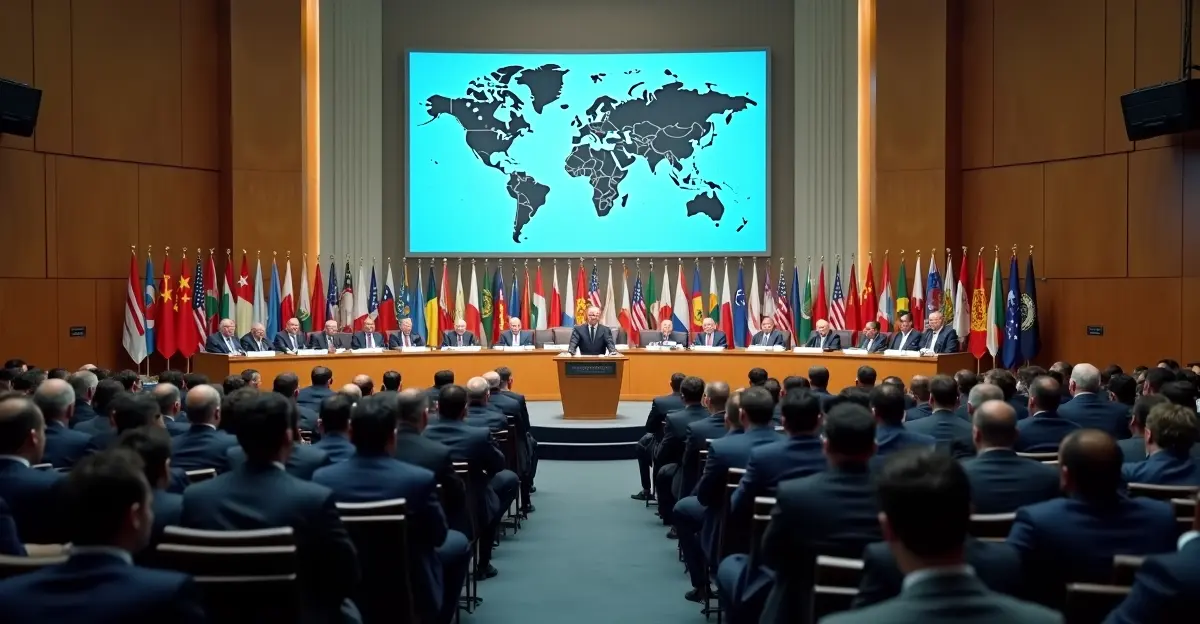
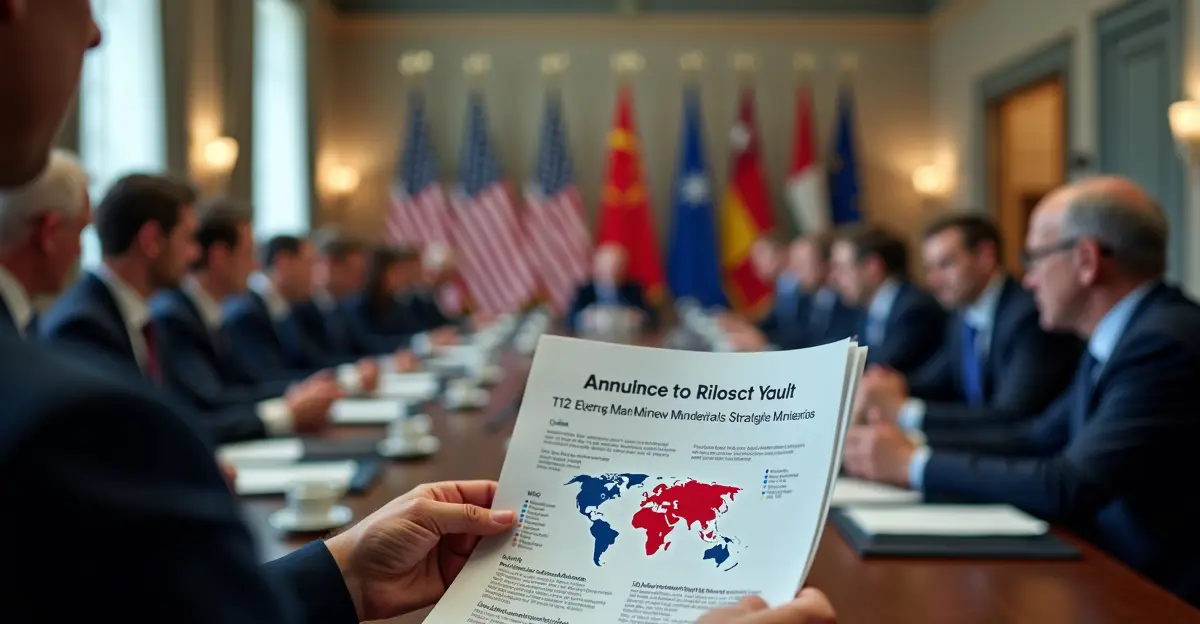
On February 4, 2026, the U.S. State Department launched the Forum on Resource Geostrategic Engagement (FORGE) at the inaugural Critical Minerals Ministerial in Washington, D.C. Chaired by the Republic of Korea, FORGE succeeds the Minerals Security Partnership and brings together 54 nations and the European Commission. Secretary of State Marco Rubio, alongside Vice President JD Vance and other cabinet officials, signed 11 new bilateral critical minerals frameworks with countries including Argentina, Morocco, the Philippines, the UAE, and the UK. The U.S. has mobilized over $30 billion in financing for critical mineral projects, aiming to reduce market concentration and strengthen end-to-end resilient supply chains for minerals essential to AI, robotics, batteries, and advanced technologies.
Project Vault: A $12 Billion Strategic Reserve
On February 2, 2026, the Export-Import Bank of the United States (EXIM) announced Project Vault, a landmark $12 billion public-private initiative ($10 billion EXIM loan plus nearly $2 billion in private investment) to establish the U.S. Strategic Critical Minerals Reserve. The reserve will store essential raw materials in secure facilities nationwide, with support from industry leaders including GE Vernova, Mercuria, and Boeing. President Trump stated the reserve ensures American businesses and workers are never harmed by mineral shortages. However, analysts estimate full Western supply chain independence remains 5–7 years away, with a critical 12–18 month window before China's expanded export controls potentially expire in November 2026. The 2025 economic crisis has further strained Western fiscal capacity for such investments.
Europe's Dilemma: The Critical Raw Materials Act
The EU's Critical Raw Materials Act, which came into effect in May 2024, sets ambitious benchmarks for 2030: 10% extraction, 40% processing, and 25% recycling capacity, with no more than 65% dependency on a single country. The European Commission has selected 60 Strategic Projects under the Act and announced €3 billion in funding for 2026 under the ReSourceEU Action Plan. Yet experts warn that rebuilding independent processing capacity will take 12 to 20 years—far beyond the narrowing window to act. NATO members currently hold only 6–9 months of stockpiles for 12 defense-critical raw materials, far below the strategic reserves needed to withstand a prolonged supply disruption. The artificial intelligence regulation debate in Brussels has also diverted political attention from raw materials security.
Resource Nationalism: A New Layer of Risk
Beyond China's dominance, a wave of resource nationalism is reshaping critical mineral supply chains. Indonesia successfully banned raw nickel exports, boosting domestic processing to over 50% of global production. Chile, under newly inaugurated President José Antonio Kast, maintains a state-centric lithium model where access is governed by Special Lithium Operation Contracts (CEOLs) and direct state participation. The DRC, which produced 73% of global cobalt supply in 2025, imposed strict export quotas in February 2025, causing Q1 2026 exports to plummet from 123,000 tons to 48,800 tons year-over-year. Benchmark cobalt prices surged 160%. However, opaque quota allocations have created investor uncertainty—China-backed miner MMG received a 2026 quota of only 360 tons against a 6,000-ton capacity. These moves mirror China's strategy, forcing Western nations to compete for access to raw materials while navigating sovereign control. The global energy transition depends on resolving these tensions.
Expert Perspectives
'China is not trying to cut off supply entirely—it is using calibrated, reversible restrictions to maintain pricing power and extract strategic concessions while discouraging Western investment in alternatives,' notes a multi-institutional analysis from the European Parliament Research Service, OECD, and CSIS. 'The West faces a narrowing 12-to-18-month window to act decisively or accept prolonged vulnerability.'
Analysts outline three strategic pathways for the West: managed dependence (accepting Chinese dominance with hedging), costly independence (requiring $400 billion by 2035 to build alternative supply chains), or hybrid resilience (combining stockpiles, recycling, and strategic partnerships). Each pathway carries significant economic and geopolitical trade-offs.
FAQ
What are critical minerals?
Critical minerals are raw materials essential to national economies and security, with vulnerable supply chains. They include rare earth elements, lithium, cobalt, nickel, tungsten, and antimony—key inputs for defense, EVs, renewable energy, and advanced technologies.
Why does China dominate critical mineral processing?
China controls roughly 90% of global rare earth processing, 80% of tungsten, and 60% of antimony due to decades of strategic investment, state-owned enterprise consolidation, and lower environmental standards. Its 15th Five-Year Plan (2026–2030) explicitly leverages this dominance for geopolitical advantage.
What is the FORGE initiative?
FORGE (Forum on Resource Geostrategic Engagement) is a 54-nation alliance launched by the U.S. in February 2026 to counter China's critical mineral monopoly. It succeeds the Minerals Security Partnership and is backed by over $30 billion in U.S. financing for diversified supply chains.
How much time does the West have to diversify?
Analysts estimate a narrowing 12-to-18-month window before China deepens its grip. Rebuilding independent processing capacity would take 20–30 years, while full supply chain independence remains 5–7 years away even with accelerated investment.
What is Project Vault?
Project Vault is a $12 billion public-private initiative ($10 billion from EXIM plus $2 billion private) launched in February 2026 to establish a U.S. Strategic Critical Minerals Reserve, storing essential raw materials in secure domestic facilities.
Conclusion: The Window Is Closing
The convergence of China's permanent export controls, Western diversification efforts, and rising resource nationalism marks a defining moment for global energy security. While FORGE and Project Vault represent significant steps, the scale of investment required—estimated at $400 billion by 2035—far exceeds current commitments. The 12-to-18-month window to act is narrowing, and without coordinated international action, the West risks accepting decades of strategic dependence on Beijing. The critical minerals supply chain will determine the future of defense, technology, and the energy transition.

Follow Discussion